Desktop & hardwareAmateur radio software
HamStream
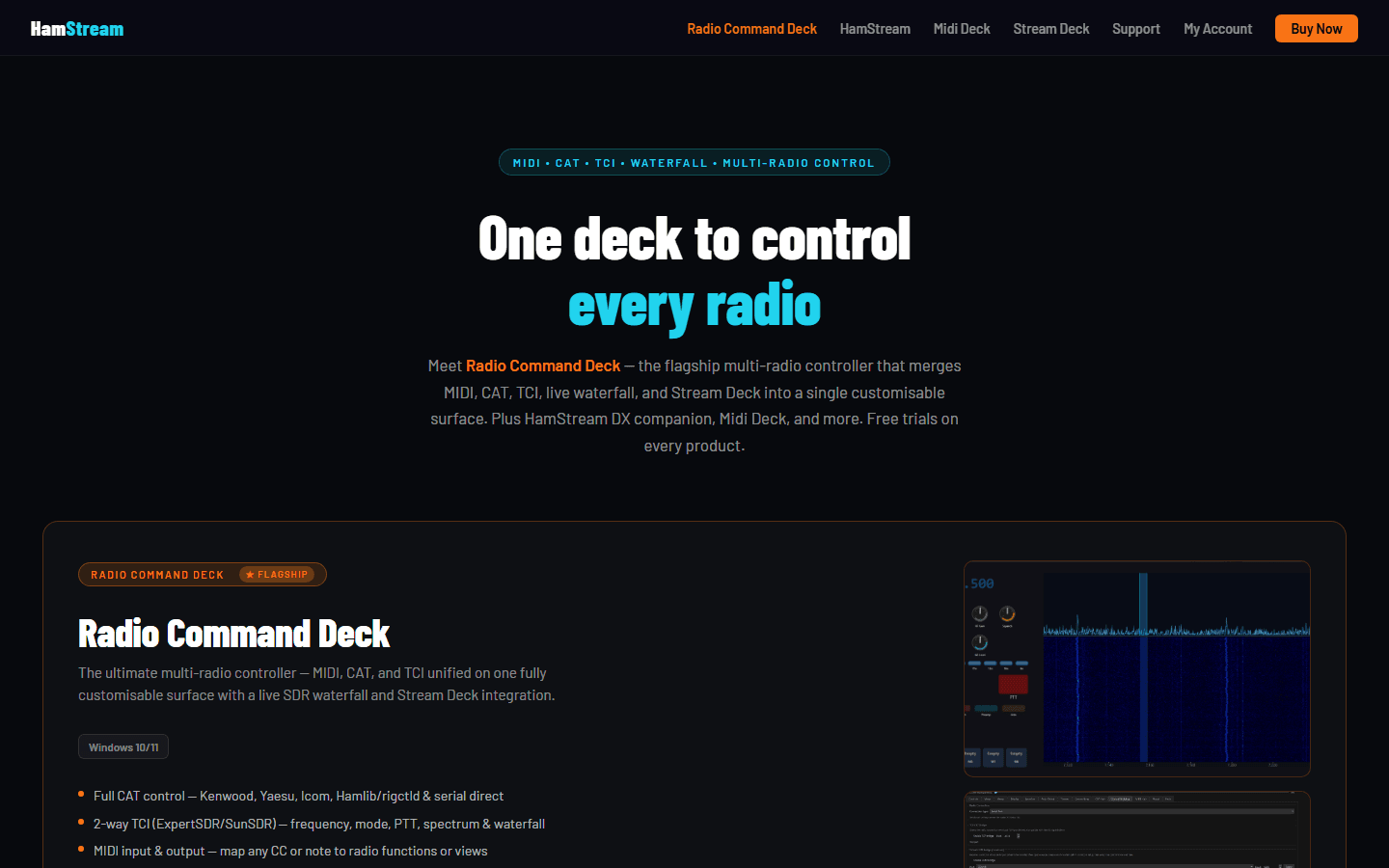
A commercial desktop application for amateur radio operators, with a licensing system, release channels and a marketing site that sells and delivers it.
Case study hamstream.co.uk

Desktop & hardware
A desktop till for traders working where the signal is not: it runs the counter, the kitchen and the customer display over their own local network.

The brief
Ordering software is only as good as the connection under it, and the places our traders work — fields, car parks, festival sites — are exactly the places with no connection. The brief was a till that never stops taking money, with the kitchen screen and the customer display driven from the same machine rather than from the internet.
The challenge
The constraints that shaped every decision after them.
What we built
The decisions that mattered, and why we made them.
The desktop application runs a small local service on its own network, so kitchen, display and connect screens are served from the machine on the counter rather than from the internet.
Orders stream to every attached screen over a persistent connection, so a ticket appears in the kitchen as it is rung in, with no refresh and no polling.
Devices discover the till on the network automatically, and a QR code gets a phone or tablet onto the right screen in one scan instead of a typed address.
Trading data is written to a local database on the machine and reconciled with the platform when there is a connection, so an outage costs a sync rather than a service.
The outcome
Built with
More work
A commercial desktop application for amateur radio operators, with a licensing system, release channels and a marketing site that sells and delivers it.
A native software-defined radio client speaking a hardware UDP protocol directly, with multiple receivers and a touch-first interface.

A desktop image-processing tool that converts raster artwork into clean, gradient-aware vector output through a multi-stage pipeline.
Every project on this site started with a short email describing a problem. Tell us yours and we will come back with scope, cost and timescale.